
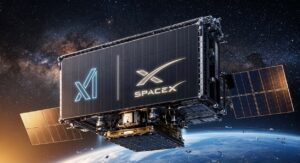
xAI is the artificial intelligence company Elon Musk founded in March 2023 to build Grok, and as of February 2026 it is no longer an independent business — SpaceX acquired it in a $1.25 trillion all-stock merger, folding one of the world’s most closely watched AI labs into Musk’s rocket company ahead of a planned SpaceX IPO. This guide explains who runs xAI, how Grok makes money, what the SpaceX deal actually changed, and why the merger matters for businesses and readers in Nigeria and across Africa.
Key Takeaways
- xAI, founded by Elon Musk in 2023, is no longer an independent company, SpaceX acquired it in February 2026 in a $1.25 trillion all-stock merger.
- Grok reached approximately 117 million monthly active users by March 2026, per SpaceX’s own IPO filing, putting it third in the US chatbot market behind ChatGPT and Gemini.
- xAI’s Colossus 2 supercomputer in Memphis is one of the largest dedicated AI training clusters built to date, while the older Colossus 1 is now leased to rival lab Anthropic.
- xAI generates revenue through consumer subscriptions, API access, and enterprise and government contracts, with estimated annual recurring revenue near $500 million against a much higher monthly burn rate.
- The merger has implications beyond Silicon Valley, tying AI infrastructure to satellite connectivity in ways that matter directly for African markets already relying on Starlink.
- What Is xAI?
xAI is an AI research and product company founded by Elon Musk in March 2023, built around a single flagship product: the Grok family of AI models. Grok launched in November 2023 as a chatbot woven directly into X (formerly Twitter), and it has since expanded into a standalone app, an enterprise API, voice and video generation tools, and a coding agent called Grok Build. xAI’s stated mission is to accelerate human scientific discovery through AI it describes as maximally curious and truth-seeking, positioning Grok as a more direct, less filtered alternative to rivals like ChatGPT, Gemini, and Claude.
For most of its short history, xAI operated as a fast-moving, independent startup that raised over $42 billion across several funding rounds including a $20 billion Series E in January 2026 at a $230 billion valuation, backed by investors such as Nvidia, Fidelity, Qatar Investment Authority, and Saudi Arabia’s Humain. That independence ended abruptly weeks later.
- The SpaceX Acquisition: What Actually Happened
On February 2, 2026, SpaceX announced it had acquired xAI in an all-stock transaction, creating a combined entity valued at $1.25 trillion, the largest corporate merger in history by that measure. The deal valued SpaceX itself at roughly $1 trillion and xAI at $250 billion within the new structure. xAI shareholders received 0.1433 shares of SpaceX for every xAI share they held, with some executives given the option to take cash instead at $75.46 per share.
Musk framed the merger as building “the most ambitious, vertically-integrated innovation engine on (and off) Earth,” pointing to a long-term ambition around orbital data centers training and running AI models on satellites and space-based infrastructure rather than only on Earth. The timing was closely tied to a separate move: SpaceX’s own plans for a mid-2026 initial public offering, one widely expected to rank among the largest IPOs in history.
xAI has not shut down or rebranded. Grok, Colossus, and the xAI product team continue operating under the xAI name but xAI is now a subsidiary inside SpaceX’s corporate structure, not a standalone company with its own board and cap table.
- Why Musk Merged the Two Companies
Three forces pushed the merger forward. First, capital: xAI was reportedly burning close to $1 billion a month training and running Grok models, and merging with cash-generating, high-valuation SpaceX gave it a deeper balance sheet. Second, compute: frontier AI training now depends on enormous, power-hungry data centers, and SpaceX’s satellite and energy infrastructure expertise is directly relevant to scaling that further. Third, timing: combining the two businesses ahead of SpaceX’s IPO let Musk bundle his AI ambitions into a single public offering rather than taking xAI public separately later.
- Who Runs xAI Now?
Elon Musk remains the driving figure behind both Grok’s product direction and the merged company’s strategy. However, the leadership picture at xAI has shifted substantially since its 2023 founding all eleven of xAI’s original co-founders had departed the company by March 2026, a turnover rate that stands out even by fast-moving AI-lab standards. Day-to-day product and engineering work continues under the xAI brand, but strategic and financial decisions now run through SpaceX’s corporate structure.
How Does xAI Make Money?
xAI generates revenue through four main channels, though it does not break out standalone financial figures publicly:
- Consumer subscriptions — SuperGrok and X Premium/Premium+ tiers that unlock higher usage limits, Grok Build access, and voice features.
- Developer API access — pay-per-token pricing for Grok models, Grok Build (priced at roughly $1 per million input tokens and $2 per million output tokens at launch), and voice/video generation APIs.
- Enterprise contracts — Grok Enterprise, marketed as an Enterprise-ready assistant, sold to businesses needing deployment at scale.
- Government contracts — Grok for Government, which in late 2025 was selected by the US Department of War to deliver frontier AI capabilities, alongside a separate federal partnership announcement.
Bloomberg has estimated xAI’s annual recurring revenue at around $500 million in 2026, a fraction of its reported monthly cash burn near $1 billion, a gap the SpaceX merger was partly designed to close.
Grok’s Growth: The Real Numbers
Grok’s user growth accelerated sharply through early 2026. The most reliable figures come from an unusual source: SpaceX’s own IPO filing, which disclosed Grok user data as part of its financial disclosures, a far more authoritative number than the third-party estimates analysts had relied on previously.
METRIC FIGURE PERIOD
Monthly active users ~117 million March 2026
Monthly active users ~35 million December 2025
US chatbot market share 17.8% (peak) January 2026
Global web traffic share ~2.8% April–May 2026
Grok.com monthly visits ~283–326 million Peak, March 2026
That still leaves Grok well behind ChatGPT (roughly 53% of the US chatbot market) and Gemini (around 29%), but the growth curve — a 95% quarter-on-quarter jump in active users signals that Grok has moved from a novelty feature bolted onto X into a genuine third option in the mainstream AI assistant market. Notably, March 2026 also marked Grok’s first month-on-month user decline after fourteen straight months of growth, suggesting the early hyper-growth phase is leveling off.
Inside Colossus: xAI’s Compute Advantage
Much of xAI’s competitive strategy rests on Colossus, its custom supercomputer cluster built in Memphis, Tennessee. Colossus 2 came online in January 2026 as a gigawatt-scale training cluster running a unified Blackwell GPU architecture, and xAI has stated an ambition to reach roughly one million GPUs across its facilities. It is one of the largest dedicated AI training buildouts announced by any lab to date.
In a twist that surprised much of the industry, SpaceX leased the earlier Colossus 1 facility — 220,000 Nvidia GPUs drawing about 300 megawatts to rival lab Anthropic for approximately $5 billion a year through 2029. Reports suggest Colossus 1 had architectural constraints that left it running at only around 11% utilization for xAI’s own workloads, making a paying outside tenant a more efficient use of the asset than idle capacity.
Grok’s Model Lineup: Where Things Stand
xAI has shipped models at a rapid pace. Grok 4.3, released in May 2026, became the company’s cost-efficient flagship with a 1-million-token context window and native video input, scoring 53 on the Intelligence Index against a market median of 35. Grok 4.5 followed as a stronger successor built on a reported 1.5-trillion-parameter architecture internally known as V9. In July 2026, Musk announced that a roughly 2-trillion-parameter Grok 4.6 model had finished its initial training run, explicitly positioned to outperform Moonshot AI’s Kimi K3. Grok 5, long teased as the company’s next major leap, had not shipped as of this writing, with xAI’s own channels pointing to a later 2026 window.
Beyond the core chatbot, xAI has expanded into adjacent products: Grok Build (an agentic coding tool now integrated with platforms like Kilo Code, OpenCode, and OpenClaw), Grok Voice (speech-to-speech models with voice cloning), and Grok Imagine (image-to-video generation).
- What the Merger Means for Africa and Nigeria
For African businesses and policymakers, the SpaceX-xAI merger is not a distant corporate story, it’s a preview of how concentrated the AI infrastructure race is becoming. SpaceX already controls Starlink, the satellite internet service expanding across underserved parts of Nigeria and the wider continent. Folding a frontier AI lab into that same corporate structure means one company increasingly controls connectivity infrastructure, compute infrastructure, and the AI models running on top of both.
Practically, this raises three questions worth tracking: how enterprise AI pricing shifts as xAI’s products get cross-bundled with SpaceX services; whether Grok’s African-market features and language support expand as the company chases growth beyond its US and Indian user bases; and how African AI policy discussions should account for infrastructure this consolidated. Nigerian startups building on Grok’s API should also watch for pricing or access changes tied to the broader corporate restructuring.
- xAI vs. the Competition
Grok sits third in the US chatbot market, but the competitive picture shifts depending on the metric used. By global web traffic, Similarweb data puts ChatGPT near 54.7%, Gemini around 27.4%, Claude at roughly 8.2–8.9%, and Grok at about 2.8%. By raw monthly active users, OpenAI’s ChatGPT and Google’s Gemini both report figures well into the hundreds of millions to over a billion, leaving Grok’s 117 million a distant third but still a meaningful presence.
What differentiates xAI strategically is not user count but ownership structure and distribution. No other major AI lab is now owned by a satellite and rocket company with its own launch infrastructure, energy ambitions, and social media platform baked in. That vertical integration is Musk’s stated bet and also the thing critics point to when questioning whether xAI’s roadmap will be driven by AI research priorities or by the broader Musk corporate ecosystem’s needs.
Frequently Asked Questions
1. What is xAI?
xAI is the artificial intelligence company Elon Musk founded in March 2023. It builds the Grok family of AI models and chatbots, integrated into X and available through a standalone app and API. In February 2026, SpaceX acquired xAI in an all-stock deal, making it a subsidiary rather than an independent company.
2. Is xAI still an independent company?
No. As of February 2, 2026, xAI became part of SpaceX through an all-stock acquisition valuing the combined entity at $1.25 trillion. xAI now operates as a subsidiary within SpaceX’s corporate structure, though Grok continues shipping products under the xAI brand.
3. How does xAI make money?
Through SuperGrok and X Premium subscriptions, developer API access to Grok models, and enterprise and government contracts via Grok for Government and Grok Enterprise. Estimated annual recurring revenue sits near $500 million against a much higher monthly cash burn.
4. How many people use Grok?
Grok reached approximately 117 million monthly active users by March 2026, according to SpaceX’s IPO filing, placing it third in the US chatbot market behind ChatGPT and Gemini.
5. What is Colossus?
Colossus is xAI’s supercomputer infrastructure in Memphis, Tennessee. Colossus 2, a gigawatt-scale training cluster, came online in January 2026. SpaceX has leased the older Colossus 1 facility to rival lab Anthropic for roughly $5 billion a year through 2029.
6. Why does the xAI-SpaceX merger matter for Africa?
It concentrates AI compute, satellite infrastructure, and capital under one trillion-dollar entity, affecting how African markets access AI tools, Starlink connectivity, and enterprise AI pricing — a trend African policymakers and businesses should track closely.
Sources & References
Bloomberg — “SpaceX Acquires xAI as Musk Prepares for Mega IPO” (Feb 2026)
CNN Business — “Elon Musk’s SpaceX acquires xAI” (Feb 2026)
CNBC — “Musk’s xAI, SpaceX combo is the biggest merger of all time” (Feb 2026)
xAI official news page (x.ai/news)
Reuters, via Apptopia data on US chatbot market share
SpaceX IPO filing, cited via multiple market-data trackers (2026)
Similarweb global AI traffic share data (April–May 2026)
AI Sphere Hub — AI news and education for global and African audiences.