
By 2026, Al is the process of simulating human intelligence in devices that have been taught and programmed to act and think like people. It can also be used to describe any computer that demonstrates the human intellect characteristics such as the ability to learn and solve problems.
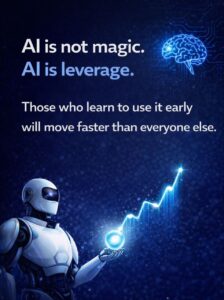
For years, people talked about AI as something on the horizon, a future technology that would one day change everything. That day has arrived. In 2026, artificial intelligence is no longer a concept in a lab or a feature in a sci-fi movie. It is a real, daily tool that is reshaping how people work, learn, create, and make decisions. Whether you are a student, a business owner, a marketer, or just someone trying to get more done, AI is quietly working in your favor. Here are the 5 most important benefits you need to understand right now.
TABLE OF CONTENTS
- Benefit of AI in Productivity
- Benefits of AI in Automation
- Benefits of AI in Learning
- Benefits of AI in Finance
- Benefits of AI in Strategy
- Benefits of AI in Production
- Scale Your Content Production10x
Before the intervention of AI, writing a single blog post, product description, or social media campaign could take hours, sometimes an entire day. In 2026, that same work takes minutes. Tools like Claude and ChatGPT generate high-quality first drafts that writers, marketers, and business owners can refine and publish in a fraction of the time. This is not about replacing creativity. It is about removing the blank page. Ideas flow faster, output doubles, and the mental exhaustion of starting from scratch disappears.
2. Role of AI in Modern Production
AI in music production is not entirely new. Computer-generated music has existed since the 1950s, when composers like Lejaren Hiller experimented with algorithm-based compositions such as the Illiac Suite. Even earlier forms of procedural and serial composition showed that technology has long influenced how music is created. Today, AI serves as a creative production tool rather than a replacement for creativity itself. Producers and musicians can now use AI to generate beats, suggest melodies, enhance sound design, and speed up workflow. For example, an artist who may not know how to create a calypso rhythm from scratch can use AI to generate one quickly, make adjustments, and continue producing efficiently.
The biggest impact of AI in modern production is speed and accessibility. Tasks that once required large studio teams, expensive equipment, or extensive technical knowledge can now be completed faster with AI-assisted tools. This allows creators to focus more on creativity, experimentation, and refining their sound. However, AI also brings challenges. In commercial music production, some studios may reduce the use of session musicians for background instrumentals or repetitive production tasks. Despite this shift, live performances and human artistry remain highly valued because audiences still connect deeply with real performers, emotion, and stage presence.
Ultimately, AI is transforming production by acting as a powerful assistant, improving efficiency, expanding creative possibilities, and changing how modern music is produced without completely replacing human talent.
- Benefits of AI in Automation
The automobile industry is experiencing a major transformation with the integration of Artificial Intelligence. Over the last few years, AI has changed the way vehicles are designed, manufactured, and driven. What once seemed futuristic, like self-driving cars, voice-controlled systems, and smart safety features — is gradually becoming part of everyday life. Modern vehicles now come equipped with intelligent systems that can detect obstacles, monitor blind spots, warn drivers about collisions, and even apply brakes automatically during emergencies. These features help reduce accidents caused by human error, fatigue, or distraction. For many drivers, AI acts like an extra set of eyes on the road.
Despite these advantages, AI in the automotive industry also raises concerns about job displacement and overdependence on technology. Some traditional manufacturing roles may decrease as automation increases. However, AI is also creating new opportunities in software engineering, robotics, cybersecurity, and vehicle data analysis. Overall, AI is revolutionizing the automotive industry by making vehicles smarter, safer, and more efficient. As technology continues to evolve, the connection between AI and transportation will likely become even stronger, changing how people travel and interact with vehicles in the future.
- Benefits of AI in Learning
Artificial Intelligence is changing the way people learn, teach, and access education. From personalized study recommendations to virtual tutors, AI is making learning more flexible, interactive, and efficient than ever before. As someone observing the rapid growth of educational technology, it is clear that AI is no longer just a futuristic concept, it is becoming a practical tool used daily by students, teachers, and institutions around the world. One of the most important benefits of AI in learning is personalized education. Every student has a different learning style, pace, and level of understanding. Traditional classrooms often struggle to meet the needs of every learner at the same time. AI solves this challenge by analyzing a student’s strengths, weaknesses, and performance patterns to create customized learning experiences. For example, if a student struggles with mathematics but performs well in science, AI-powered systems can adjust lesson difficulty and recommend additional practice specifically for mathematics.
In addition, AI-powered virtual tutors and chatbots provide instant support outside the classroom. Students no longer have to wait until the next school day to ask questions or get clarification. AI learning assistants can explain concepts, generate examples, summarize notes, and provide study guidance at any time of the day. This creates a more continuous and independent learning experience. From a technological perspective, predictive analytics is one of the smartest uses of AI in education. AI can analyze student performance data to identify early signs of academic struggles. Teachers and institutions can then intervene quickly before students fall too far behind. This proactive approach can improve academic success and reduce dropout rates.
- Benefits of AI in Finance
Artificial Intelligence has the potential to revolutionize to transforms the financial industry in various ways…… Generative AI is transforming the financial industry in several significant ways. From improving customer experience to enhancing fraud detection and investment strategies, AI is helping financial institutions operate more efficiently, securely, and intelligently in today’s digital economy. One of the major advantages of Generative AI in finance is personalized risk assessment. AI systems can analyze individual financial behavior, spending patterns, goals, and risk tolerance to create customized financial plans. This allows banks and investment firms to provide smarter wealth management solutions tailored to each customer’s needs.
Furthermore, AI improves efficiency and productivity within financial institutions. Many repetitive tasks such as data processing, report generation, customer verification, and transaction monitoring can now be automated. This reduces operational costs, increases accuracy, and allows employees to focus on more strategic responsibilities. Despite these advantages, the use of AI in finance also raises concerns related to data privacy, cybersecurity risks, and overdependence on automation. Financial institutions must therefore ensure that AI systems are transparent, secure, and ethically managed.
Overall, Generative AI is revolutionizing the financial industry by improving security, increasing efficiency, enhancing customer experiences, and supporting smarter financial decision-making. As technology continues to evolve, AI will play an even greater role in shaping the future of global finance.
- Benefits of AI in Strategy
As Artificial Intelligence continues to transform industries and societies, ensuring that its benefits are distributed fairly across different socioeconomic groups has become increasingly important. AI has the potential to improve healthcare, education, finance, agriculture, transportation, and many other sectors. However, without proper planning and inclusive policies, the advantages of AI may remain concentrated among a limited group of individuals, organizations, or developed regions, thereby increasing inequality. Ethical AI design is equally important. AI systems should be developed using principles of fairness, transparency, accountability, and inclusiveness. Developers must actively identify and address biases in data, algorithms, and automated decision-making processes to prevent discrimination and unfair outcomes. Ethical AI practices help ensure that technology benefits all individuals and communities equally while minimizing potential harm.
Apple Releases Security Updates Early in Response to AI Cybersecurity Threats