
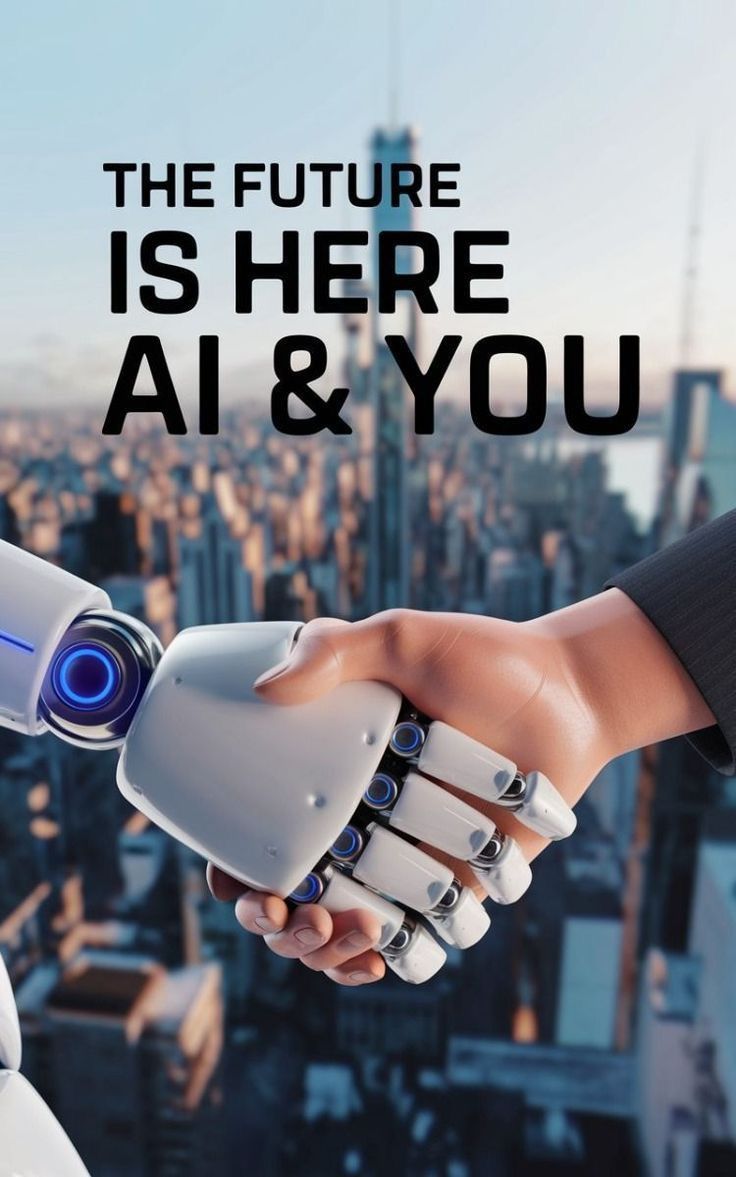
Let’s discover 7 major AI trends shaping 2026, from autonomous agents and multimodal AI models to edge computing, automation, machine learning, AI regulation, business innovation, and the future of artificial intelligence technology.
Key Takeaways
* How AI Is Amplifying Human Potential at Work
* AI Safety, Security, and Workplace Regulation in 2026
* How AI Is Transforming Scientific Research
* AI Solving Real-World Problems – From Laboratory to the Field
* How AI Is Learning to Understand Software Context
* Quantum Computing and AI- What Is Coming in 2026
* AI in Healthcare- Faster Diagnosis, Smarter Treatment
What is Artificial Intelligence?
Artificial Intelligence is the field of creating intelligent systems that can perform tasks requiring human intelligence. Using AI algorithms, machine learning, data, and computational models, modern AI technology can analyze information, make decisions, generate content, and automate complex processes at scale.
What is AI all about?
Artificial Intelligence may seem complicated on the surface, but the basic idea is actually easier to understand than most people think. At its core, AI starts by gathering huge amounts of data — pictures, text, videos, audio, numbers, and almost anything humans can interact with digitally. This data becomes the “experience” the AI learns from, similar to how humans learn through observation and repetition.
“Ever wondered how TikTok somehow knows the exact video you’ll watch next? That’s neural networks and machine learning working behind the scenes.”
Next comes the learning process. Developers create AI algorithms, which are basically sets of mathematical instructions that teach machine learning systems how to recognize patterns, analyze information, and improve over time. These algorithms guide how neural networks process data and make decisions.
Neural networks are the real engine behind modern Artificial Intelligence . They are digital systems made up of interconnected “neurons” or nodes that work together to process information and produce results. Whether it’s recommending videos on social media, recognizing faces in photos, generating text, or powering chatbots, neural networks are what make many AI systems feel intelligent.
What makes this fascinating — and sometimes a little scary — is that neural networks are not always explicitly programmed step-by-step. Instead, they learn from data and adjust themselves during training. Over time, the AI models strengthen certain connections and weaken others based on what produces the best results. This is why deep learning systems can sometimes behave in ways even their creators did not fully predict.
Once trained, these neural networks become part of a larger AI application. The neural network may be the “brain,” but the final product also includes the user interface, software systems, databases, and input/output tools that make the technology usable in everyday life.
One of the biggest challenges in machine learning is what researchers call the “black box problem.” We can see the information going into the AI system and the result coming out, but the internal reasoning process is often difficult for humans to fully understand. For example, a neural network trained to identify cats may learn features like whiskers, ears, or fur patterns, but the exact combination of weighted connections it uses remains difficult to explain.
This lack of transparency raises important concerns in areas like medicine, banking, cybersecurity, and law, where understanding why an AI made a decision matters just as much as the decision itself. Because of this, researchers are investing heavily in Explainable AI (XAI), a growing field focused on making AI models more transparent, trustworthy, and easier for humans to interpret
- How AI Will Amplify Human Potential At Work
Aparna Chennapragada, Microsoft’s Chief Product Officer for AI experiences, believes that 2026 will mark a major shift in Artificial Intelligence (AI) — from systems that simply answer questions to intelligent tools that work alongside people in real time.
She describes this new phase as a deeper partnership between technology and humans, where AI agents and machine learning systems become active collaborators instead of just tools.
“The future isn’t about replacing humans,” she says. “It’s about amplifying them.”
In this new era of Artificial Intelligence (AI), AI agents will act as digital coworkers, helping individuals and small teams achieve far more than they could alone. Tasks such as data analysis, content creation, personalization, and automation will increasingly be handled by AI systems, while humans focus on strategy, creativity, and decision-making.
She envisions a future where even a small team — such as three people — can execute global projects in a short time. With the support of AI automation, neural networks, and intelligent systems, businesses will be able to scale faster, work smarter, and innovate more efficiently.
Organizations that design workflows where people actively collaborate with AI will gain a strong competitive advantage, unlocking the best combination of human creativity and machine intelligence.
Her advice to professionals is clear: instead of competing with AI, learn how to work with it. The future of Artificial Intelligence (AI) belongs to those who adapt, upskill, and embrace human–AI collaboration. According to her, the coming years will reward people who elevate human creativity rather than replace it.
2. AI workplace safety rules and regulations in 2026: Building Trust in the Future of Work
AI agents are expected to grow rapidly in 2026, becoming a core part of everyday work in modern organizations. According to Vasu Jakkal, Corporate Vice President of Microsoft Security, these systems will no longer function as simple tools — they will behave more like digital teammates that assist with tasks, decisions, and workflows.
As companies increasingly rely on Artificial Intelligence (AI) agents for productivity and automation, trust will become one of the most important factors in adoption. Jakkal emphasizes that this trust must begin with strong security systems.
“Every agent should have similar security protections as humans,” she explains, “to ensure agents don’t turn into ‘double agents’ carrying unchecked risk.”
In practical terms, this means each AI agent should have a clear digital identity, just like an employee in a company. For example, an AI agent handling customer support should only access customer service data — not financial records or internal security systems. This helps reduce risks and prevents misuse.
Organizations will also need to control what data AI agents can access, monitor how they use it, and secure the information they generate. If an AI agent is used to summarize emails or generate reports, it must be protected from manipulation or external attacks that could alter its outputs.
Jakkal also highlights that AI security will become built-in and continuous, rather than something added after systems are developed. This means security will operate in the background — automatically detecting threats, preventing misuse, and adapting in real time.
For example, if an AI agent is used in a financial company to analyze transactions, security systems will continuously monitor its behavior. If unusual activity is detected, the system can immediately restrict access or alert human supervisors.
As cybercriminals also begin using Artificial technology to develop more advanced attacks, defensive AI systems will be deployed to counter them. These “security agents” will help detect threats faster and respond in real time, creating an ongoing battle between attackers and defenders powered by Artificial Industry.
“Trust is the currency of innovation,” Jakkal says, emphasizing that strong security and governance will be essential for organizations that want to successfully adopt AI at scale.
AI will become central to the research process
Artificial Intelligence (AI) is already speeding up major breakthroughs in areas like climate modeling, molecular simulations, drug discovery, and materials design. According to Peter Lee, President of Microsoft Research, this is only the beginning of a much bigger transformation in how science itself is done.
In 2026, AI will go beyond simply summarizing research papers, answering scientific questions, or writing reports. Instead, it will actively participate in the discovery process across fields like physics, chemistry, and biology.
Lee explains that future Artificial Intelligence (AI) systems will be capable of generating scientific hypotheses, running digital tools, and even interacting with experimental systems that control real-world lab equipment. In simple terms, AI will no longer just “assist” scientists — it will collaborate with them.
For example, instead of a researcher manually testing hundreds of chemical combinations, an AI system could suggest the most promising experiments, predict outcomes, and help prioritize which tests should be run first. In advanced labs, AI could even help automate parts of the experiment itself, reducing time and cost.
This shift is similar to how AI already works with software developers through “pair programming,” where tools like coding assistants help write, debug, and improve code in real time. The same idea is now expanding into science — where every researcher could soon have an AI-powered lab assistant.
Imagine a biologist working on disease treatment or a chemist designing new materials. Instead of working alone, they will have an intelligent AI partner that continuously analyzes data, suggests new directions, and helps refine ideas faster than traditional methods.
This evolution in machine learning and AI systems is expected to dramatically accelerate innovation. It could change how discoveries are made, reducing the gap between ideas and real-world results in science and engineering.
How AI Is Helping Solve Big Challenges From The Lab To The Field
Artificial Applications is no longer limited to research labs or theoretical experiments — it is now actively solving real-world problems across industries. From scientific discovery to agriculture, healthcare, and engineering, AI is bridging the gap between research environments and practical field applications.
In research labs, Intelligence Systems is used to process massive datasets, run simulations, and speed up experiments that would normally take months or even years. Scientists rely on machine learning solutions to identify patterns in complex data, such as climate changes, disease behavior, or chemical reactions.
For example, in drug development, AI models can analyze thousands of chemical compounds and predict which ones are most likely to work as effective treatments. This reduces the time and cost of traditional laboratory testing and helps bring solutions to market faster.
Once these discoveries move from the lab into real-world environments, AI applications continue to play a major role. In agriculture, AI Innovation help farmers monitor soil conditions, predict weather patterns, and improve crop yields. In healthcare, AI tools assist doctors in diagnosing diseases earlier and more accurately using imaging and patient data.
These real-world AI use cases show how technology is not just staying in controlled environments but actively transforming industries in the field. Whether it is autonomous systems in transportation, predictive maintenance in factories, or smart decision-making in business, AI is becoming a core driver of efficiency and innovation. This seamless transition from experimentation to execution is what makes AI one of the most powerful technologies shaping the future of work, science, and society.
How AI Is Learning to Understand Software Context-Not Just Code
Artificial Intelligence is no longer just learning how to write code — it is beginning to understand the context behind software development. future of AI can now recognize patterns in programming, predict what developers are trying to build, and even assist in solving problems before humans finish typing. For example, tools powered by context-aware AI coding can automatically suggest lines of code, detect bugs, explain complex functions, and recommend faster solutions. If a developer is building a login page, the AI may understand the purpose of the project and suggest authentication systems, security improvements, or user interface components that fit the context of the application.
This is possible because machine learning models are trained on massive amounts of programming data, including open-source projects, documentation, and real-world software examples. Instead of simply memorizing syntax, AI learns relationships between functions, structures, and developer intentions.
“It’s clear we’re at an inflection point,” Repository intelligence “will become a competitive advantage by providing the structure and context for smarter, more reliable AI.”
The Next Leap in Computing Is Closer Than Most People Think(2026 Guide)
For most of our lives, “better computing” meant one thing: a faster processor. Every couple of years, Intel or AMD would release a chip with more transistors, and everything would run a little quicker. That era is ending. Not slowly — like a fading sunset — but quickly, like flipping a switch.
The next leap in computing, arriving in full force by 2026, is not about speed. It’s about diversity. Instead of one brain doing everything, we’ll have many different brains — each designed for a specific kind of thinking. Some will be quantum (great at solving impossible puzzles). Some will be neuromorphic (great at seeing patterns with almost no power). Some will be invisible, living in your walls and car seats, reacting before you even speak.
This sounds like science fiction. But according to researchers at MIT, IBM, and multiple market intelligence firms, these technologies are not coming in 2050. They are coming in months. Production timelines, commercial chips, and real-world deployments are already scheduled for 2026 and 2027.
Microsoft’s Majorana 1 marks a major development toward more robust quantum systems, Zander says. It’s the first quantum chip built using topological qubits, a design that inherently makes fragile qubits more stable and reliable. It’s also the only quantum solution engineered to catch and correct errors.
For years, quantum computing has been the tech world’s favorite promise: “One day, this will change everything.” But every time you asked “Is it useful yet?” the answer was some version of “Almost.”
2026 is the year “almost” becomes “now.”
IBM has publicly committed that this year, a quantum computer will solve a real problem that a classical computer cannot. Not a made-up math problem a real one, like simulating a molecule for drug discovery or optimizing a supply chain.
What About the MIT Cooling Breakthrough?
The MIT and Lincoln Laboratory breakthrough you referenced in your excerpt is not from IBM — it’s from MIT. I can provide those links separately if you need them.
According to IBM’s official 2026 roadmap, “we will have the first examples of quantum advantage using a quantum computer with an HPC” .
What made this possible? A breakthrough from MIT and Lincoln Laboratory. They solved a nasty engineering problem: keeping quantum chips cold enough to work. Their new chip-based cooling method reaches temperatures ten times lower than anything we could do before. That’s like going from a freezer to the cold vacuum of space. And they did it on a chip small enough to fit in a server rack.
Artificial Intelligence in Healthcare: Transforming Patient Care and Medical Research
AI is helping scientists speed up research by analyzing complex data and simulating natural processes at a scale and pace that would be impossible otherwise. From early diagnosis to drug discovery, AI is helping doctors make faster, more accurate decisions while also accelerating medical research in ways that were not possible before.
Today, hospitals and research institutions are no longer relying only on traditional methods. Instead, they are using AI in healthcare to analyze patient data, detect patterns in diseases, and support clinical decisions in real time.
One of the biggest impacts of AI is in patient care. AI systems can now analyze medical images like X-rays, CT scans, and MRIs to detect diseases earlier than the human eye sometimes can.
For example, an AI system can scan a lung image and highlight early signs of infection or tumors. A doctor then uses this insight to confirm diagnosis faster and start treatment earlier. This reduces delays and can save lives. In medical research, AI is helping scientists process massive amounts of data in seconds. Research that once took years can now be completed in months or even weeks.
For example, when developing new drugs, AI can analyze thousands of chemical compounds and predict which ones are most likely to work against a disease. This reduces trial-and-error in laboratories.
A real-world example is drug discovery during global health crises, where AI models were used to identify potential treatments much faster than traditional methods.
Final thoughts
Artificial Intelligence is quickly becoming a key driver of innovation across industries, from healthcare and software development to research and computing. As AI trends 2026 continue to evolve, we are moving into a future where intelligent systems don’t just assist humans — they actively collaborate with us.
The real shift is in human–AI collaboration, where tools like AI agents, machine learning systems, and automation help people work faster, smarter, and with more creativity. But as AI grows, so does the need for trust, safety, and responsible use.
In the end, the future of Artificial Intelligence will be shaped by how well we adapt to it — not just as users, but as partners in building a more intelligent world.
Frequently Asked Questions:
Will AI replace humans?
No. The future of AI trends 2026 is more about working together than replacement. AI is designed to support people — helping us work faster, think smarter, and handle repetitive tasks while humans focus on creativity, decision-making, and real-world problem-solving.
How is AI used in real life today?
AI is already part of everyday life. In healthcare, it helps doctors detect diseases earlier. In business, it analyzes data and improves decisions. In education, it supports personalized learning. In software development, it helps write and debug code. Overall, AI is quietly making work easier and more efficient across different industries.
Why is AI important for the future?
AI matters because it helps people do more in less time. It boosts productivity, speeds up innovation, and solves complex problems that would normally take humans much longer to handle. As technology grows, AI will continue to play a key role in shaping how we live and work.