
Chinese AI models are pulling U.S. enterprise workloads away from OpenAI and Anthropic in mid-2026, as rising token prices and export-control turbulence push American businesses toward cheaper open-source alternatives. Who is switching? Mid-sized U.S. companies and developers frustrated by frontier-model pricing. What changed? Models like DeepSeek and Z.ai’s GLM-5.2 now perform close enough to top American systems that price, not raw capability, decides the vendor. When did this accelerate? Since February 2026, and sharply after GLM-5.2’s June launch. Where is this happening? Across U.S. developer platforms like OpenRouter and Vercel, and increasingly in Nigeria and the rest of Africa. Why does it matter? It signals a structural shift in how the world buys AI. How is it playing out? Through quiet, task-by-task routing decisions rather than any single dramatic vendor switch.
- The Cost Gap Driving the Shift
The math is now hard to ignore for finance teams approving AI budgets. Open-source Chinese models can run 60% to 90% cheaper than the leading Anthropic and OpenAI models, according to Justin Summerville, who works on data and analytics at OpenRouter. That gap has moved beyond a curiosity for hobbyist developers into a line item enterprise buyers actively negotiate around.
- Why “Tokenmaxxing” Is Losing to Efficiency
Enterprise AI strategy has quietly flipped. Teams that once defaulted to the strongest available model for every task are now routing simpler jobs to whichever system is “good enough.” Harpreet Arora, head of agentic infrastructure at Vercel, described this reallocation directly to CNBC, noting that price is now doing much of the decision-making work for engineering teams once locked into a single frontier provider.
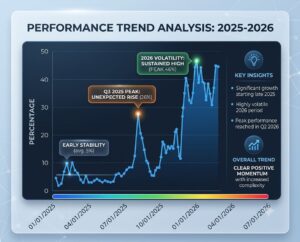
The numbers back up that behavioral shift. The share of tokens U.S. companies route to Chinese AI models via OpenRouter has stayed above 30% every week since early February 2026, at times climbing as high as 46%, up sharply from an 11% average over the prior twelve months.
- GLM-5.2: The Model Rattling Silicon Valley
Z.ai’s GLM-5.2, released in June 2026, has become the clearest proof point for this trend. The 750-billion-parameter open-weight model, built with a 1-million-token context window and trained to run on domestic Chinese chips, landed within a percentage point of Anthropic’s Opus 4.8 on a closely watched agentic benchmark, at roughly a fifth of the cost.
Adoption followed almost immediately. Arora told CNBC that in its first full week after launch, GLM-5.2’s daily token volume grew about 27 times over, while the number of customers using it grew roughly 80-fold. LaunchLemonade, an AI agent platform serving regulated industries, has already seen GLM-5.2 climb into its top five most-used models alongside Claude and ChatGPT.
- Why Timing Mattered
GLM-5.2’s launch landed just as Anthropic paused global access to its Fable and Mythos-class models under a Trump administration export order, and OpenAI separately limited the rollout of new GPT-5.6 models at the government’s request. Z.ai co-founder Tang Jie publicly called Anthropic’s suspension “deeply regrettable,” framing Chinese open weights as a more stable institutional bet than models subject to sudden policy reversal.
Both restrictions were short-lived. Export controls on Anthropic’s Fable and Mythos models were lifted at the end of June 2026, and Anthropic restored access on July 1. Still, the episode left many enterprise buyers newly wary of depending on any single, policy-exposed provider.
- DeepSeek’s Quiet Staying Power
While GLM-5.2 grabbed headlines, DeepSeek has continued building a durable base among U.S. developers on cost alone. Stu Clott, an operations manager and part-time developer in San Diego, told Rest of World that an hour of coding work that cost about $10 on Claude ran him less than 50 cents on DeepSeek. He has since expanded his use of the model to personal counseling and household finance tools.
On OpenRouter, models from DeepSeek, Tencent, MiniMax, and Xiaomi now occupy the four most popular positions by token traffic, according to Rest of World’s reporting. Vercel separately found DeepSeek’s share of gateway token usage jumped from under 1% to 17% in a single month, even though its share of platform revenue stayed close to 1%, reflecting just how much cheaper the tokens are.
- How Close Is the Performance Gap, Really?
Kyle Chan, a fellow in the John L. Thornton China Center at Brookings, estimates Chinese frontier models are currently six to nine months behind the top U.S. systems, while running at a fraction of the cost. That gap is narrow enough that for many day-to-day enterprise tasks, engineers no longer see a compelling reason to pay the American premium.
- Why U.S. Companies Are Getting Cost-Conscious Now
Kyle Chan told CNBC that where U.S. companies once prioritized AI adoption regardless of which model they used, they are now noticeably more cost-conscious as spending scales up across entire organizations. That shift matters because it reflects AI moving from experimental pilot budgets into recurring operational line items that finance teams scrutinize the same way they would cloud computing or software licensing costs.
Yacine Jernite, head of machine learning at Hugging Face, described a related motivation: companies increasingly want AI stacks they can control and adapt themselves, and the state of open-source and open-weight development today often points them toward Chinese options as the most capable choice in that category.
- The Political Risk Nobody Is Ignoring
Chinese models still face real obstacles in the U.S. market. The Commerce Department placed Z.ai on its trade blacklist in 2025, and lawmakers have opened investigations into U.S. firms, including Airbnb and Cursor-owner Anysphere, after they disclosed using Chinese open models. Developers also continue to raise concerns about data security and the companies’ ties to the Chinese government, a friction point The New York Times has reported on directly.
As OpenRouter’s Justin Summerville put it, nobody in this market can say with confidence which model will lead in three weeks. That uncertainty is itself pushing some buyers toward open-weight systems they can run and control on their own infrastructure, regardless of who built them.
What This Means Going Forward
The direction of travel looks durable rather than temporary. Z.ai plans a dual listing in Shanghai to fund further AI development, and its next model, GLM-5.5, is expected in August 2026. Meanwhile, U.S. labs face a harder question: whether to compete on price, double down on frontier performance premiums, or pursue both strategies for different market segments simultaneously.
For businesses evaluating AI vendors today, the practical lesson is that model choice is becoming task-specific rather than company-wide. High-stakes, highly regulated, or safety-critical workloads may still justify paying for the strongest available frontier model. Routine coding, drafting, and internal automation tasks increasingly do not.
Frequently Asked Questions
1. Why are U.S. companies switching to Chinese AI models?
Cost is the primary driver. Open-source Chinese models can run 60% to 90% cheaper than leading Anthropic and OpenAI models, while closing the performance gap on many everyday enterprise tasks.
2. Which Chinese AI models are gaining the most traction in the U.S.?
DeepSeek, Z.ai’s GLM-5.2, MiniMax, Tencent’s models, and Xiaomi’s MiMo are seeing the fastest adoption growth among U.S. developers and enterprises in 2026, according to OpenRouter and Vercel usage data.
3. Is GLM-5.2 really close to Anthropic’s Opus 4.8 in performance?
On one widely watched agentic benchmark, GLM-5.2 landed within a percentage point of Opus 4.8, while costing roughly a fifth as much to run, according to industry data reported by CNBC.
4. Are Chinese AI models gaining ground in Nigeria and Africa too?
Yes. Nigerian and other African startups are increasingly fine-tuning open-source Chinese models like DeepSeek and Alibaba’s Qwen because of lower costs, fewer licensing restrictions, and a better fit for local infrastructure and languages than proprietary Western platforms.
5. What risks do Chinese AI models carry for businesses using them?
Data security concerns, geopolitical scrutiny, and regulatory exposure are real risks. The U.S. Commerce Department placed Z.ai on a trade blacklist in 2025, and lawmakers have investigated American firms over their use of Chinese open models.