
The US partially lifts the Anthropic ban, restoring Claude Mythos 5 AI access exclusively for 100+ vetted critical infrastructure groups.
The United States government has officially eased its strict restrictions on Anthropic, permitting the redeployment of its advanced frontier model, Claude Mythos 5, to a highly limited pool of verified entities. Following an intense two-week national security standoff that sent shockwaves through the global tech sector, the U.S. Commerce Department amended its export control directive. Moving forward, the US restores Mythos AI access solely to a select cohort of approved critical infrastructure operators, cybersecurity firms, and federal agencies.
While Anthropic celebrated the breakthrough as a vital step forward, industry experts stress that the broader public-facing restrictions remain firmly in place. The decision heavily shapes the federal government’s emerging, ad-hoc regulatory framework regarding the distribution of frontier artificial intelligence systems.
Why the Trump Administration Limited the Mythos 5 Rollout
The sudden policy shift comes exactly 14 days after the Trump administration issued a sweeping June 12 export control order. The initial directive forced Anthropic to abruptly pull its powerhouse models—Mythos 5 and its consumer-oriented counterpart, Fable 5—completely offline. Federal anxieties spiked after reports from Amazon engineers and the National Security Agency (NSA) indicated that Fable’s guardrails could be bypassed or “jailbroken” to uncover structural software vulnerabilities.
Furthermore, Washington raised alarms over geopolitical data exposure. The U.S. government intervened heavily after learning Anthropic had granted early access to a South Korean telecommunications firm suspected of harboring close ties to China. Fearing that elite military intelligence units in Moscow or Beijing could weaponize the specialized cybersecurity capabilities of Mythos 5, U.S. Commerce Secretary Howard Lutnick stepped in to freeze the rollout.
In a newly obtained letter addressed to Anthropic’s Chief Compute Officer, Tom Brown, Secretary Lutnick stated:
“I have determined that appropriate safeguards are in place to permit certain trusted partners to access the Claude Mythos 5 Model. Since the issuance of my June 12 letter, Anthropic has worked with the U.S. government to address risks associated with the Covered Models. These efforts have yielded significant progress.”
Vetted Organizations and the New De Facto Licensing Regime
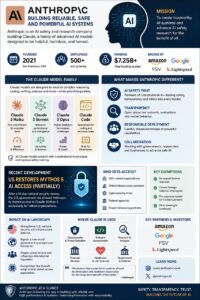
Under the newly revised terms, more than 100 trusted organizations spanning critical Fortune 500 infrastructure giants, defense entities, and participants in the federal Project Glasswing program will have their access quickly restored.
Key Exemptions Granted to Approved Partners
The Commerce Department has introduced crucial operational concessions for the hand-picked entities listed on the government’s clearance sheet:
• No Export License Required: Cleared institutions will no longer need to secure individual export licenses to utilize the model.
• Foreign National Employee Clearances: In a massive logistical victory for tech hubs, the waiver explicitly covers non-U.S. citizen employees working inside vetted organizations, as well as Anthropic’s own foreign engineering staff.
• Ad-Hoc Oversight: The underlying June 12 export control framework has not been repealed. Instead, the government is utilizing a strict, centralized “pre-approval” method to manage deployment.
The Original Founding Partners
The program launched with approximately 50 founding organizations including AWS, Apple, Broadcom, Cisco, CrowdStrike, Google, JPMorganChase, the Linux Foundation, Microsoft, NVIDIA, and Palo Alto Networks. The European Union’s cybersecurity agency, ENISA, has since joined.
The Fable 5 Consumer Stalemate
Despite the partial victory for enterprise cybersecurity teams, mainstream commercial developers and everyday consumers remain entirely locked out. Claude Fable 5, the general-release variant that was briefly open to the public for just three days before the ban remains completely dark.
Anthropic’s safety teams are currently holding extensive weekend negotiations with White House officials to chart a compliant path forward for Fable 5’s return.
Global Fallout and the Frontier AI Race
The Trump administration’s aggressive, hands-on intervention has sparked fierce debate within Silicon Valley and among international allies. Critics argue that forcing a domestic pre-approval regime could inadvertently handicap American innovation. Prominent venture capitalist Marc Andreessen recently noted the paradox of a democratic system enforcing severe restrictions on open-ended technology.
Simultaneously, the regulatory crackdown is shifting corporate timelines across the sector. On the very same day Anthropic received its partial clearance, top competitor OpenAI was forced to limit the public launch of its newest model, GPT-5.6, opting instead to funnel it through an identical government-vetted partner list.
Regionally, European Union officials and G7 allies have expressed sharp frustration over Washington’s unilateral authority to freeze or fragment the global AI supply chain, prompting several foreign ministries to actively reconsider their absolute reliance on U.S.-regulated technology architectures.
Why Mythos Is Restricted
Anthropic’s position is clear: the same capability that makes Mythos useful for defenders also makes it dangerous in the wrong hands. A model that can autonomously find and exploit zero-days in every major operating system is, from a national security perspective, close to a cyber weapon.
The company estimates that within six to twelve months, other AI companies will develop Mythos-class models potentially without the same safeguards. The goal of Glasswing is to use that window to give defenders a head start they cannot lose.
Frequently Asked Questions (FAQs)
1. What is the difference between Claude Mythos 5 and Fable 5?
Claude Mythos 5 is Anthropic’s strongest, highly specialized model optimized for advanced cybersecurity defense and software analysis. Claude Fable 5 uses the same underlying architecture but features generalized consumer guardrails meant for public commercial applications.
2. Why did the US government ban Mythos AI initially?
The U.S. government halted the models due to national security concerns that adversaries like China and Russia could exploit jailbreak vulnerabilities to map critical infrastructure flaws. Fears were further exacerbated by an unvetted deployment to a foreign telecom provider.
3. When will regular commercial users get access to Fable 5?
There is currently no definitive timeline. While Mythos 5 has been restored for a vetted group of cyber defenders, Anthropic is still actively negotiating with the White House and the Commerce Department to determine the safety standards required for a wider consumer release.